
How AI-Based Video Analytics Strengthens Modern Security Monitoring
Security monitoring has changed significantly in the last few years. Earlier, CCTV systems were mainly used to record footage for review after an incident. This approach was useful for evidence, but it did not always help organisations prevent incidents or respond quickly.
In 2026, real-time security monitoring is becoming more intelligent, connected, and action-oriented. Businesses, factories, logistics hubs, banks, delivery centres, smart cities, and public spaces can no longer depend only on manual surveillance. Security teams often monitor multiple screens at once, which increases the risk of missed events, delayed response, and human fatigue.
This is where video analytics is making a major difference. By using AI to analyse live camera feeds, video analytics can detect suspicious movement, unauthorised entry, crowding, unattended objects, and other risk indicators in real time. Instead of simply recording what happened, it helps security teams understand what is happening and respond faster.
What Is Video Analytics in Security Monitoring?
Video analytics refers to the use of AI-powered software to automatically analyse video footage. It can identify people, vehicles, objects, movement patterns, restricted-zone violations, and unusual behaviour in live or recorded camera feeds.
Unlike traditional CCTV systems, video analytics does not rely entirely on a human operator monitoring every screen. It analyses visual data, identifies significant events, and sends alerts when predefined conditions are met.
For example, if a person enters a restricted area, a vehicle stops in an unauthorised zone, or an object is left unattended, the system can notify the security team immediately. This makes monitoring more proactive and reduces the gap between detection and action.
Why Real-Time Security Monitoring Matters in 2026
Modern security environments are becoming more complex. A single facility may have dozens or even hundreds of cameras across entry gates, loading bays, storage zones, parking areas, corridors, and restricted sections. Monitoring these feeds manually is difficult, especially in high-movement locations.
Delayed incident response can lead to:
- Theft or pilferage
- Unauthorised access
- Safety violations
- Operational disruption
- Damage to property or assets
- Compliance gaps
- Poor investigation outcomes
In 2026, organisations need systems that can detect risks faster, filter out irrelevant activity, and provide meaningful alerts. Real-time security monitoring powered by video analytics helps security teams focus on the events that matter most.
Real-Time Threat Detection
One of the biggest advantages of video analytics is real-time threat detection. The system can automatically detect suspicious activity in real time and send alerts to the relevant team.
This may include:
- Loitering near sensitive areas
- Unauthorised entry into restricted zones
- People crossing virtual boundaries
- Unusual movement during non-operational hours
- Sudden crowd formation
- Tampering attempts near equipment or assets
The faster a security team is informed, the faster they can act. This reduces the chances of an incident becoming more serious.
For businesses with large facilities, this is extremely useful because it reduces dependency on continuous human observation.
Suspicious Movement and Behaviour Tracking
Suspicious movement tracking is one of the most practical applications of video analytics. It helps organisations identify movement patterns that may indicate a security risk.
For example, a person repeatedly moving around a restricted area, standing near a gate for too long, or entering a location at an unusual hour can be flagged by the system. In public spaces, it can also help detect abnormal movement patterns or crowd behaviour.
This is especially useful in:
- Banks and ATMs
- Delivery centres
- Warehouses
- Airports and transport hubs
- Industrial facilities
- Smart city areas
- Corporate campuses
Object Detection and Asset Protection
Video analytics also helps in detecting objects and protecting assets. It can identify unattended objects, misplaced items, removed assets, and tampering attempts.
In logistics and warehouse environments, this can help monitor parcels, cargo, tools, equipment, and high-value inventory. In public spaces, unattended object detection can support safety teams by alerting them to suspicious bags or packages.
For transportation and industrial businesses, object detection is useful in preventing loss, improving accountability, and supporting faster investigation when something goes missing.
Perimeter and Access Zone Monitoring
Perimeter security is a major concern for facilities that need controlled access. Video analytics can monitor boundaries, gates, entry points, parking areas, and restricted zones.
Instead of relying only on guards or physical barriers, organisations can set virtual boundaries within camera views. If a person or vehicle crosses that boundary without authorisation, the system generates an alert.
This is useful for:
- Manufacturing plants
- Government buildings
- Logistics hubs
- Residential complexes
- Corporate offices
- High-security premises
Video analytics can also be integrated with access control systems, ANPR systems, and alarms to create a more connected security environment.
Crowd Monitoring and Public Safety
Crowd monitoring is becoming more important in cities, public spaces, transport stations, stadiums, malls, and large events. Traditional CCTV can show crowd movement, but video analytics can interpret it more intelligently.
It can detect:
- Overcrowding
- Unusual gatherings
- Sudden movement changes
- Congested entry and exit points
- People moving against the normal flow
This helps authorities and facility managers take preventive action. For example, if crowd density increases near an exit gate, the system can alert the control room so that staff can redirect movement or open additional access points.
In smart city environments, this improves public safety and supports better emergency response planning.
Role of AI, IoT, and Edge Computing in Video Analytics
The growing strength of video analytics in 2026 comes from the combination of AI, IoT, and edge computing.
AI improves detection accuracy by learning movement patterns, identifying anomalies, and reducing false alerts. IoT connects cameras with sensors, alarms, access control systems, and central dashboards. Edge computing allows video data to be processed closer to the camera, reducing delay and improving response speed.
Together, these technologies help organisations move from passive monitoring to event-based security. Instead of watching everything, teams receive alerts when something needs attention.
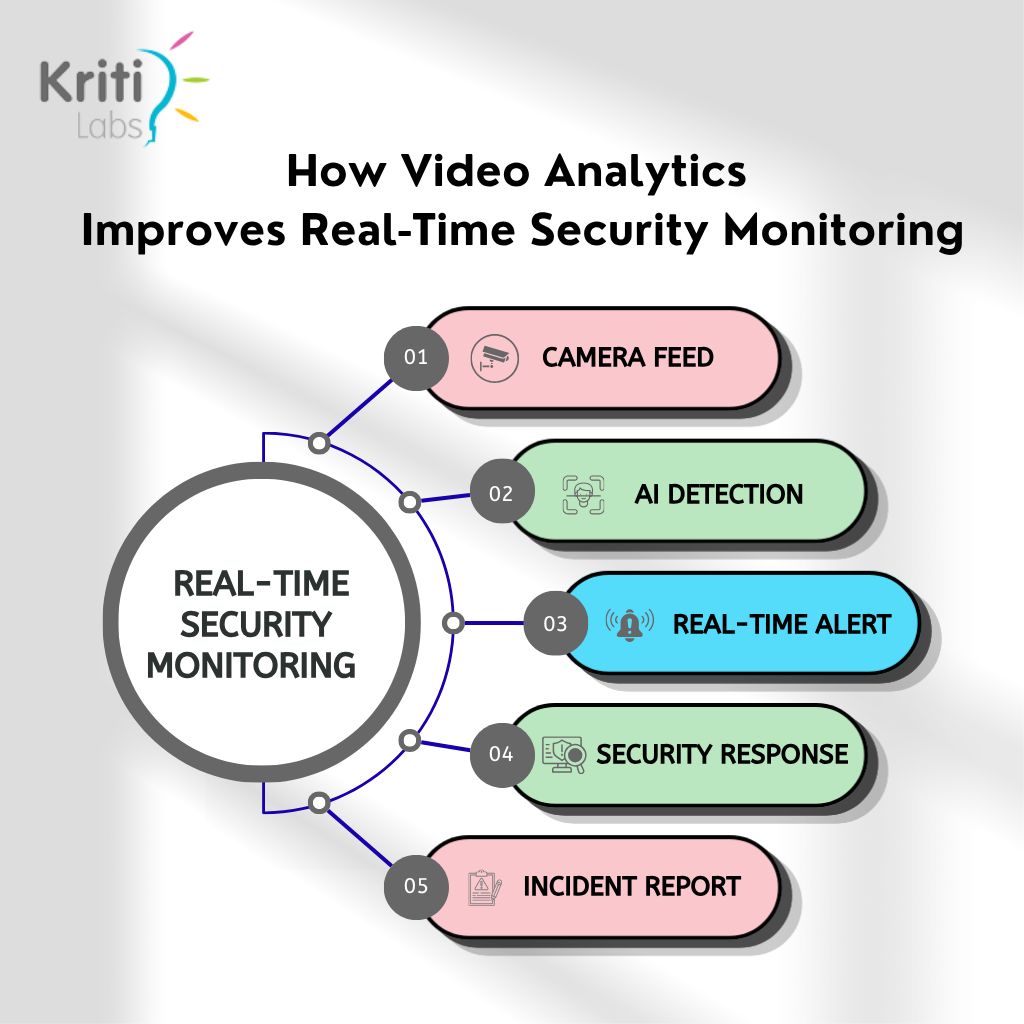
Figure 1: Automated Workflow of AI-Powered Real-Time Security Monitoring
Industry Use Cases of Video Analytics in 2026
Video analytics is valuable across several industries because each sector faces different security risks.
Logistics and Delivery Centres
Delivery centres deal with parcel movement, third-party drivers, loading bays, shift changes, and high-volume sorting areas. Video analytics helps monitor parcel theft, unauthorised access, suspicious movement, and vehicle activity.
Manufacturing and Industrial Facilities
Factories and industrial sites have machinery zones, restricted areas, safety rules, and restrictions on worker movement. Video analytics can detect safety violations, unauthorised entry, equipment tampering, and abnormal movement near hazardous areas.
Banking and Financial Institutions
Banks, ATMs, vault areas, and locker facilities require strong monitoring. Video analytics supports suspicious activity detection, access zone monitoring, and faster investigation through time-stamped video events.
Smart Cities and Public Infrastructure
Smart cities use video analytics for crowd monitoring, traffic zone monitoring, public safety alerts, and detection of suspicious movements. It supports central command centres and helps authorities respond faster.
Corporate Campuses and Commercial Premises
Corporate spaces use video analytics to monitor visitor movement, parking zones, entry gates, after-hours access, and restricted areas. It improves both physical security and operational awareness.
Benefits of Video Analytics for Real-Time Security Monitoring
Faster Incident Response
Video analytics reduces the time between event detection and action. Instant alerts help teams respond before an incident escalates.
Reduced Human Monitoring Fatigue
Security teams often monitor several camera feeds for long hours. AI-based alerts help them focus on important events rather than constantly monitoring every screen.
Better Accuracy and Evidence
Video analytics creates time-stamped events, clips, and reports. This helps during investigations, audits, and dispute resolution.
Lower Operational Risk
By detecting unauthorised access, suspicious movement, safety violations, and object-related risks, organisations can reduce losses and improve operational discipline.
Scalable Security Across Locations
Large organisations can monitor multiple sites through centralised dashboards. This is useful for companies with branches, warehouses, factories, campuses, or delivery centres across different locations.
Video Analytics vs Traditional CCTV Monitoring
| Aspect | Traditional CCTV Monitoring | AI-Based Video Analytics |
|---|---|---|
| Monitoring Style | Manual and continuous | Automated and event-based |
| Response Time | Delayed | Real-time alerts |
| Accuracy | Depends on human attention | AI-assisted detection |
| Evidence | Recorded footage | Time-stamped events and reports |
| Scalability | Difficult across many cameras | Easier through central dashboards |
| Risk Detection | Reactive | Proactive & Alert-driven |
This comparison shows why businesses are shifting from basic surveillance to intelligent monitoring systems.
Implementation Considerations for Businesses
To get the best results from video analytics, organisations should plan deployment carefully. Technology alone is not enough. The system must be configured according to actual security needs.
Important considerations include:
- Choosing the right camera locations
- Ensuring good lighting and camera quality
- Defining alert rules clearly
- Avoiding too many unnecessary alerts
- Integrating with existing CCTV and access control systems
- Training teams to respond to alerts
- Protecting video data through role-based access
- Starting with high-risk zones before scaling
A phased rollout often works best. Businesses can begin with entry gates, storage zones, loading areas, restricted sections, or other sensitive locations, then expand to the entire facility.
Challenges in Video Analytics Adoption
While video analytics offers strong benefits, adoption may come with challenges.
Some common issues include:
- Poor camera placement
- Low-quality footage
- Inconsistent lighting
- High false alerts due to unclear rules
- Lack of integration with existing systems
- Privacy concerns among employees or visitors
- Limited training for security teams
These challenges can be addressed through a proper site assessment, high-quality cameras, clear alert priorities, and responsible data handling. Security teams should also be trained to interpret alerts and respond appropriately.
Future of Real-Time Security Monitoring Beyond 2026
The future of real-time security monitoring will be more predictive, connected, and automated. Video analytics will not only detect incidents but also help identify patterns that indicate future risks.
Expected developments include:
- Stronger edge AI processing
- Integration with digital twins
- Drone-based monitoring
- Deeper connection with access control systems
- More advanced behaviour analytics
- Predictive risk alerts
- Smart city command centre integration
As more industries adopt AI and IoT, video analytics will become a core layer of modern security infrastructure.
Conclusion
Video analytics is changing the way organisations approach real-time security monitoring in 2026. It moves security from passive recording to intelligent detection, helping teams identify risks faster and respond with greater accuracy.
From logistics and manufacturing to banking, smart cities, and corporate campuses, AI-based video analytics supports faster response times, stronger evidence, reduced monitoring fatigue, and improved safety.
For organisations managing complex spaces and high-security environments, video analytics is becoming an essential part of modern security planning. It helps create a more alert, connected, and responsive security system that is prepared for the demands of 2026 and beyond.
Frequently Asked Questions