
Strengthening Security Across Modern Delivery and Fulfilment Centres
Delivery centres form the backbone of modern logistics and last-mile fulfilment operations.
With the rise of e-commerce, same-day delivery, and high-volume parcel movement, these facilities operate under constant pressure to remain fast, efficient, and secure. However, the very nature of delivery centres makes them vulnerable to security risks.
High employee turnover, multiple shifts, third-party drivers, open access zones, and continuous vehicle movement create gaps that traditional security methods struggle to address. Manual supervision, basic CCTV setups, and paper-based logs are no longer sufficient to manage today’s operational complexity.
This blog explores the most common challenges in delivery centre security and explains how organisations can overcome them using technology-driven, scalable solutions.
Why Delivery Centre Security Needs a Modern Approach?
Delivery centres differ significantly from traditional warehouses. They are dynamic environments where goods are constantly received, sorted, loaded, and dispatched. Hundreds of people and vehicles may enter and exit the premises daily, often under tight timelines.
- Multiple entry and exit points
- Temporary staff and third-party vendors
- Limited visibility across high-movement zones
- Manual processes are prone to error
- Growing regulatory and audit requirements
Without a structured and technology-enabled security framework, organisations face increased losses, operational disruptions, and reputational damage.
Challenge 1: Unauthorised Access and Identity Gaps
One of the most common challenges in delivery centre security is controlling who enters the facility and which areas they can access.
Why this happens
- Shared access cards or passwords
- Tailgating at entry points
- Manual visitor registers
- Lack of role-based access controls
Risks involved
Unauthorised access can lead to internal theft, safety incidents, and data or asset misuse. It also creates accountability gaps during investigations.
How to overcome it?
Organisations should implement digital access control systems that assign permissions based on roles, shifts, and zones. Biometric authentication, smart cards, or QR-based access ensure that only authorised personnel enter sensitive areas. Centralised access logs provide clear records for audits and incident reviews.
Challenge 2: Parcel Theft and Pilferage Inside the Facility
Internal theft is one of the most difficult issues to detect in delivery centres. Parcels may go missing during sorting, storage, or loading without immediate visibility.
Why does this happen?
- Blind spots in CCTV coverage
- High parcel volumes during peak hours
- Manual handover processes
- Limited tracking within the facility
Risks involved
Parcel theft leads to direct financial losses, customer dissatisfaction, and increased dispute resolution costs.
How to identify and prevent it?
AI-powered video analytics can monitor parcel movement and detect unusual behaviour such as repeated handling, concealment attempts, or unauthorised zone entry. Time-stamped video records combined with access data help organisations trace incidents accurately and resolve disputes faster.
Challenge 3: Limited Visibility Across High-Movement Zones
Delivery centres often struggle with monitoring busy areas such as sorting belts, loading bays, and temporary holding zones.
Why does this happen?
- Overcrowded operational spaces
- Static cameras without intelligence
- Lack of real-time alerts
Risks involved
Security teams often detect incidents after losses have occurred. Investigations become time-consuming due to incomplete data.
How to improve visibility?
Advanced surveillance systems with zone-based monitoring and real-time alerts provide better oversight. Heatmaps and movement analytics help identify congestion, unusual patterns, and potential security risks before they escalate.
Challenge 4: Managing Driver and Vehicle Security
Drivers play a critical role in delivery operations, but they also introduce security risks if not monitored effectively.
Common issues
- Unverified driver entry
- Excessive vehicle dwell time
- Route deviations
- Unauthorised stops near the facility
Risks involved
Poor driver monitoring increases the chances of theft, delivery delays, and compliance violations.
How to address this
GPS vehicle tracking combined with geofencing allows organisations to monitor vehicle movement around delivery centres. Driver identity verification and behaviour monitoring help ensure only authorised drivers access the premises and follow approved routes.
Challenge 5: Dependence on Manual Processes and Human Monitoring
Many delivery centres still rely on manual entry logs, security guards, and visual monitoring.
Why is this risky?
- Human error
- Fatigue during long shifts
- Inconsistent reporting
Impact on operations
Manual processes delay incident detection and create incomplete records, making audits and investigations difficult.
Automation through IoT sensors, digital logs, and AI-based alerts reduces dependence on manual supervision. Event-based alerts allow security teams to focus only on high-risk situations instead of continuous monitoring.
Challenge 6: Delayed Incident Response
Even when incidents are detected, a delayed response can significantly increase losses.
Common causes
- Lack of real-time alerts
- No defined escalation workflows
- Disconnected systems
How to improve response time?
Integrated security platforms that trigger automated alerts and notifications enable faster action. Escalation workflows ensure incidents are routed to the right teams immediately, reducing damage and downtime.
Challenge 7: Compliance and Audit Readiness
Delivery centres must comply with safety regulations, internal policies, and client requirements.
Common compliance challenges
- Missing or inaccurate logs
- Difficulty retrieving historical data
- Manual audit preparation
How does technology help?
Digital recordkeeping creates tamper-proof audit trails that can be accessed instantly. Automated logs simplify inspections, reduce penalties, and demonstrate operational transparency.
Role of AI and IoT in Delivery Centre Security
AI and IoT transform delivery centre security from reactive to proactive. AI analyses patterns in video, access, and vehicle data to predict risks. IoT sensors enable real-time communication between assets, vehicles, and control centres.
Together, these technologies provide:
- Predictive risk insights
- Faster incident detection
- Improved coordination between teams
Business Benefits of Strong Delivery Centre Security
A well-designed delivery centre security strategy delivers measurable business value:
- Reduced theft and operational losses
- Faster incident resolution
- Improved workforce accountability
- Better customer trust
- Scalable security as operations grow
Implementation Considerations
Organisations should focus on:
- Selecting scalable platforms
- Balancing privacy and monitoring
- Training staff and drivers
- Phased deployment across facilities
Clear communication and gradual adoption help maximise acceptance and long-term success.
Conclusion
Delivery centre security is no longer just about surveillance and guards. It requires intelligent systems that provide visibility, accountability, and proactive risk management.
By combining AI, IoT, access control, video analytics, and fleet monitoring, organisations can build delivery centres that are safer, compliant, and operationally resilient. A technology-driven approach not only protects assets but also strengthens trust across the entire logistics ecosystem.
Frequently Asked Questions (FAQs)
1. What is delivery center security?
Delivery center security refers to the systems and processes used to protect parcels, vehicles, staff, and infrastructure within a delivery or distribution facility. It includes access control, surveillance, vehicle monitoring, and digital recordkeeping to prevent theft, unauthorised access, and operational disruptions.
2. Why is delivery center security important for logistics operations?
Delivery centers handle high volumes of parcels and experience constant movement of people and vehicles. Strong security reduces theft, improves accountability, ensures regulatory compliance, and protects service quality and customer trust.
3. What are the biggest security risks in delivery centers?
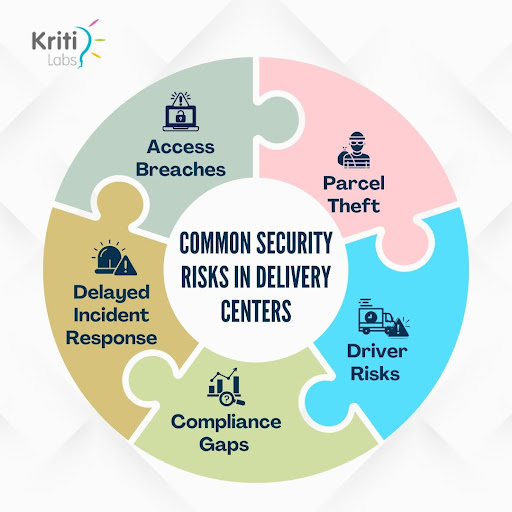
Common risks include unauthorised access, internal parcel theft, driver-related incidents, blind spots in surveillance, delayed incident response, and poor compliance documentation.
4. How does AI improve delivery center security?
AI enhances delivery center security by analysing video feeds, access logs, and movement patterns in real time. It helps detect suspicious behaviour, predict risks, and generate alerts, allowing security teams to respond faster and more accurately.
5. Can video analytics reduce parcel theft inside delivery centers?
Yes. AI-based video analytics can identify unusual handling, restricted zone access, and abnormal movement patterns. These insights help prevent theft and provide clear evidence during investigations.
6. How does vehicle tracking support delivery center security?
GPS vehicle tracking and geofencing help monitor driver entry, exit, and dwell time within the facility. This improves control over vehicle movement, reduces unauthorised stops, and supports accountability during loading and dispatch.
7. How do digital security systems support compliance and audits?
Digital security systems automatically record access logs, movement data, and incident reports. These tamper-proof records simplify audits, reduce manual effort, and help organisations meet safety and regulatory requirements.