
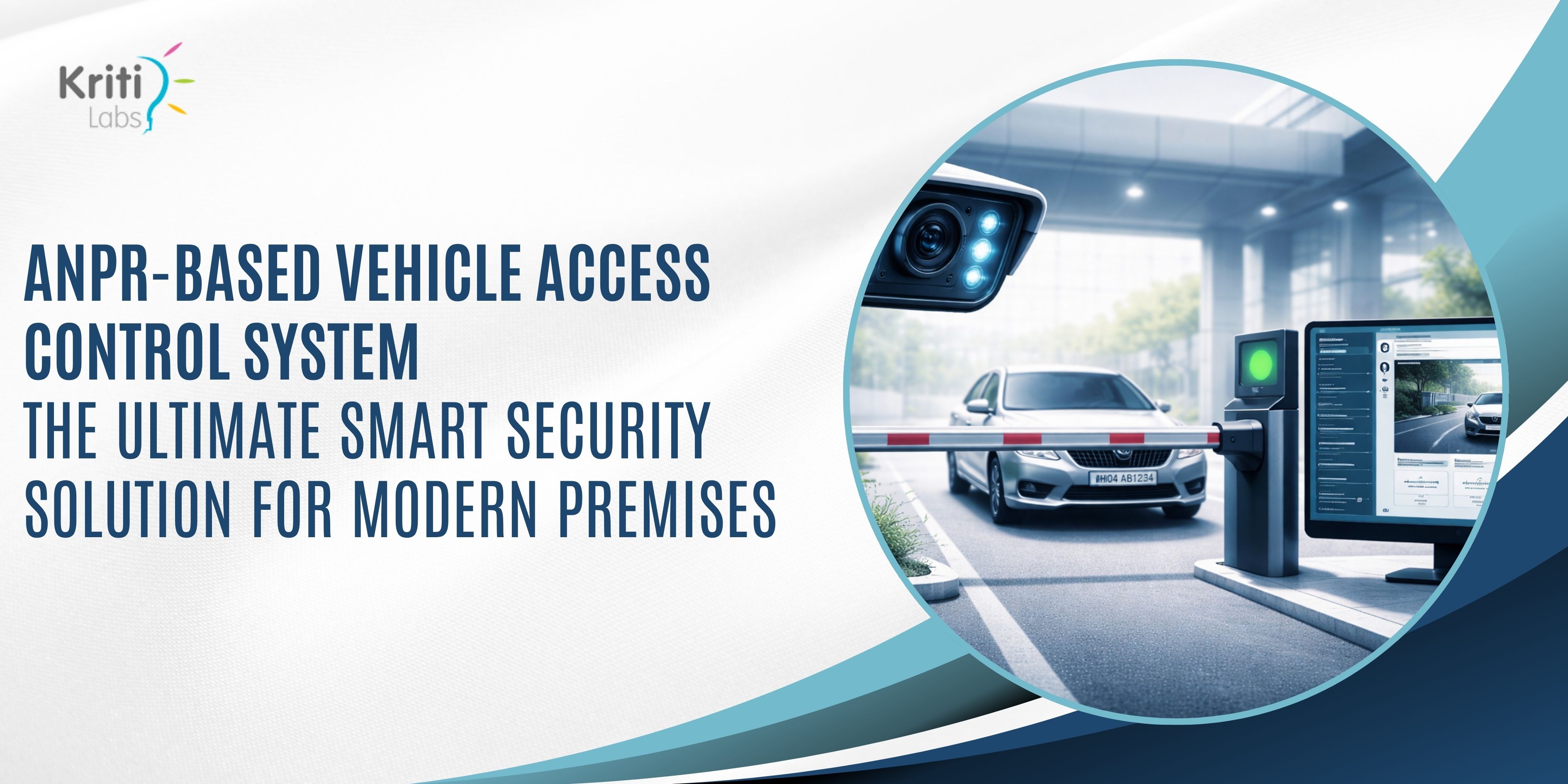
The Ultimate Smart Security Solution for Modern Premises
How ANPR Based Vehicle Access Control Systems Improve Security and Efficiency
Modern facilities face growing pressure to manage vehicle entry securely, efficiently, and at scale. From corporate campuses and residential communities to industrial plants and transport hubs, controlling vehicle access is as important as managing pedestrian access. Traditional methods such as manual gate checks, paper logs, and RFID tags are increasingly inadequate for environments that demand speed, accuracy, and accountability.
An ANPR based vehicle access control system addresses these challenges by automating identification using licence plate recognition. By combining high-resolution cameras, artificial intelligence, and integrated gate controls, it transforms vehicle entry into a seamless, contactless process. Organisations can strengthen security, reduce congestion, and maintain complete visibility over vehicle movement.
This article explains how ANPR access control works, why it is becoming essential for modern premises, and how it improves both security and operational efficiency.
What Is an ANPR Based Vehicle Access Control System?
ANPR stands for Automatic Number Plate Recognition. It is a technology that captures an image of a vehicle’s licence plate and converts it into machine-readable data using optical character recognition.
An ANPR based vehicle access control system goes beyond simple recognition. It integrates this capability with physical barriers, databases, and monitoring platforms to manage entry decisions automatically.
A typical system includes:
- High-resolution cameras positioned at entry and exit points
- Infrared illumination for reliable capture in low light or night conditions
- Image processing software for plate detection
- A database containing authorised and restricted vehicles
- Integration with boom barriers, gates, or bollards
- A central dashboard for monitoring and reporting
Unlike standalone plate recognition tools, a fully integrated system directly controls physical access. It can allow entry, deny access, or trigger alerts without human intervention.
How ANPR Vehicle Access Control Works
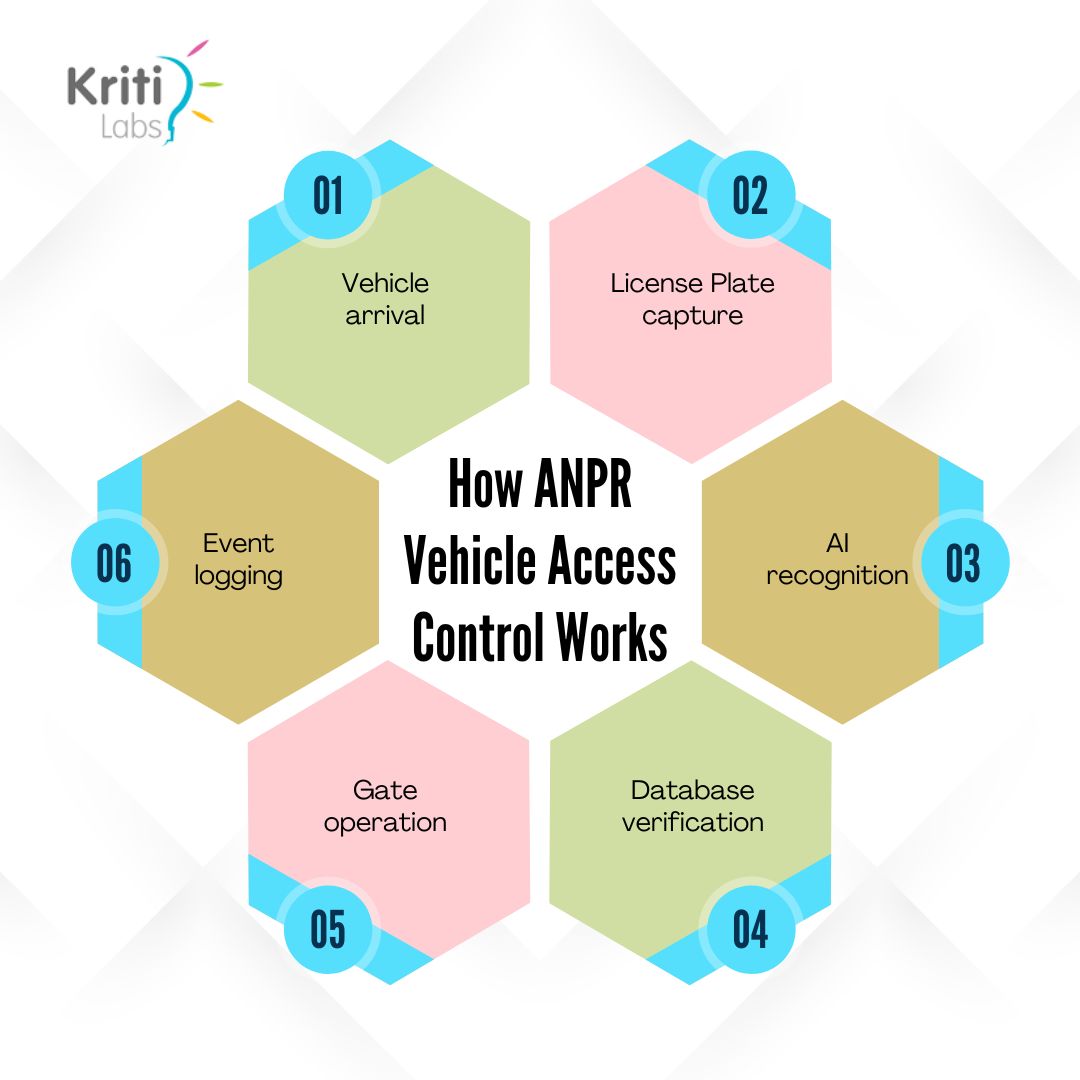
When a vehicle approaches a secured entry point, the process unfolds in seconds.
First, the camera captures the licence plate image. The system isolates the plate area and converts the characters into digital text. This data is then compared against a database containing authorised vehicles, visitor registrations, or watchlists.
Based on the result, the system performs one of several actions:
- Grants access and opens the barrier
- Denies entry and keeps the gate closed
- Flags the vehicle for manual inspection
- Sends alerts to security personnel
All events are recorded automatically. Entry time, exit time, vehicle number, and associated actions are stored for future reference. This creates a comprehensive audit trail without manual recordkeeping.
Why Modern Premises Need Smart Vehicle Access Control
Vehicle traffic has increased dramatically across most facilities. Large campuses, warehouses, and residential developments may handle hundreds or thousands of vehicles daily. Managing this flow manually is slow, inconsistent, and error-prone.
Unauthorised vehicles can pose significant risks, including theft, sabotage, or safety incidents. At the same time, long queues at gates affect productivity and user experience.
Organisations also face increasing regulatory expectations. Many sectors must maintain accurate logs of vehicle movements for security, compliance, or operational purposes.
An automated ANPR system addresses these concerns by providing fast verification, consistent enforcement, and reliable documentation.
Key Benefits of ANPR-Based Access Control Systems
Enhanced Security
The primary advantage is stronger perimeter protection. Only vehicles that meet predefined criteria can enter. Suspicious or blacklisted vehicles can be detected immediately, allowing proactive action.
Because the system does not rely on human judgement, it eliminates inconsistencies in security checks. Tailgating and identity fraud are also reduced.
Faster and Contactless Entry
Manual verification slows traffic and increases congestion at peak hours. ANPR systems allow vehicles to pass through without stopping for document checks or access cards.
This is particularly valuable for facilities where efficiency is critical, such as logistics centres or corporate campuses.
Accurate Recordkeeping
Every entry and exit is logged automatically. These records include timestamps, vehicle identity, and event details. In the event of an incident, investigators can precisely reconstruct movements.
Accurate logs also support regulatory reporting and insurance claims.
Operational Efficiency
Automation reduces the need for large security teams at entry points. Personnel can focus on surveillance and response rather than routine checks.
Centralised dashboards allow managers to monitor multiple locations from a single control centre.
Integration with Broader Security Systems
ANPR access control can connect with video surveillance, alarm systems, and command centres. For example, detection of a flagged vehicle can trigger camera tracking or alert notifications.
Key Features of an Advanced ANPR System
- Real-time vehicle detection
- Whitelist and blacklist management
- Visitor vehicle pre-registration
- Multi-lane monitoring
- Parking integration
- Cloud-based control dashboards
- Mobile notifications
- Analytical reporting on traffic patterns
These features enable organisations to adapt the system to their specific operational needs.
Industry Use Cases
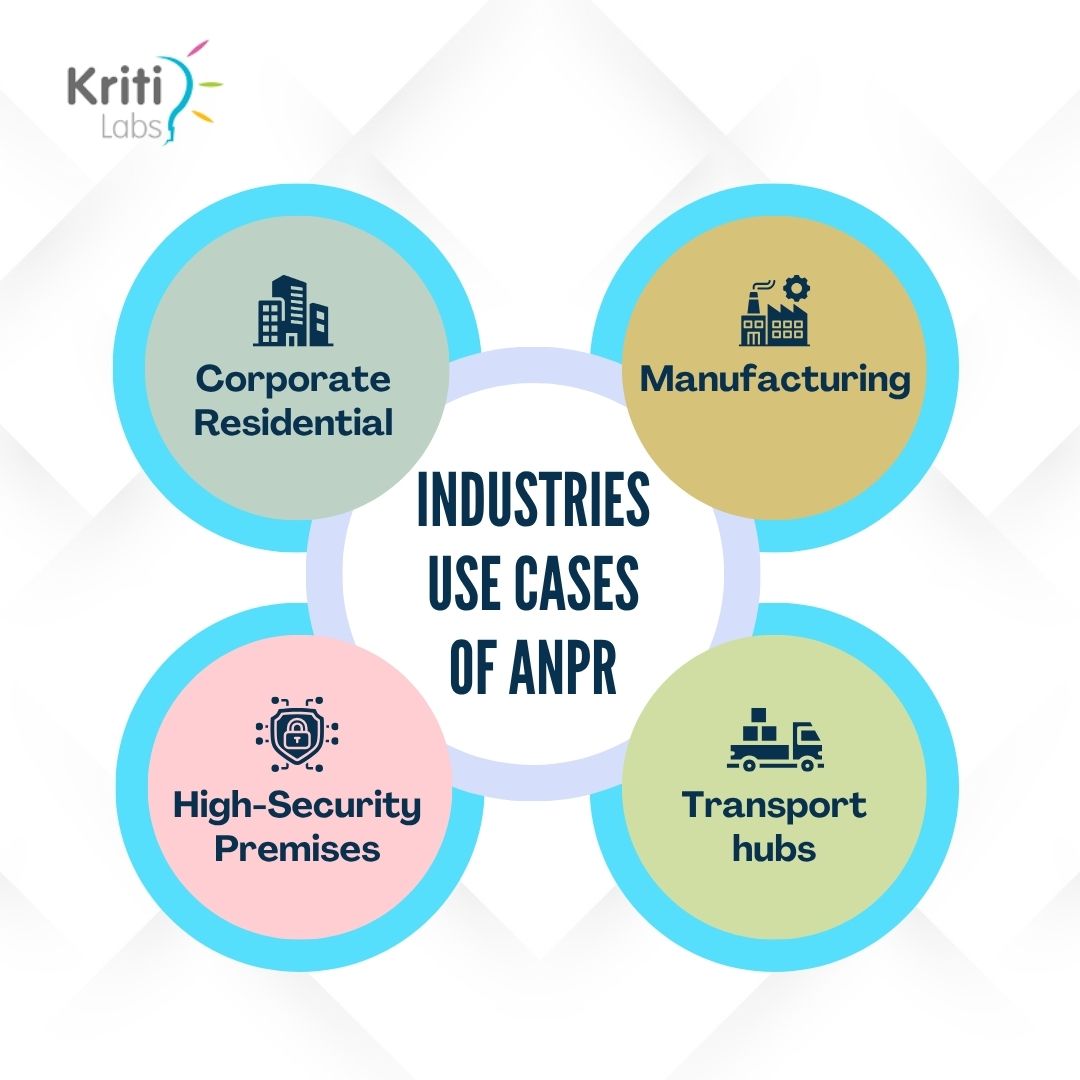
Corporate Campuses
Employee vehicles can be registered in advance, enabling automatic entry during working hours. Visitor vehicles can be approved digitally before arrival.
Residential Communities
Residents enjoy convenient access without physical passes. Unknown vehicles can be flagged for verification, improving safety.
Manufacturing and Industrial Facilities
Entry of transport vehicles can be tracked precisely. This supports material accountability and prevents unauthorised movement within sensitive areas.
Transport Hubs
Airports, ports, and logistics terminals handle high volumes of vehicles. ANPR systems enable rapid screening while maintaining strict security standards.
Government and High-Security Premises
Facilities that require strict perimeter control benefit from automated watchlist monitoring and detailed audit records.
ANPR Versus Traditional Access Methods
Traditional approaches such as manual passes, RFID cards, or guard verification have several limitations.
Manual checks depend heavily on human attention and are slow. RFID cards can be lost, shared, or duplicated. Physical passes require administrative effort and regular updates.
ANPR systems identify the vehicle itself, not a token carried by the driver. This reduces the risk of misuse and improves reliability.
Integration with AI and IoT Technologies
Artificial intelligence enhances recognition accuracy, even when plates are dirty, partially obscured, or captured at difficult angles. Machine learning models improve performance over time by adapting to local conditions.
IoT connectivity enables real-time communication between cameras, barriers, and central systems. Data from multiple sites can be aggregated for analysis.
Together, AI and IoT create a connected security environment where decisions are based on live information rather than delayed reports.
Compliance and Privacy Considerations
While ANPR systems collect vehicle data, modern platforms include safeguards to ensure responsible use.
Secure storage, encryption, and role-based access controls protect sensitive information. Organisations can define retention policies to comply with local regulations.
Transparent communication with users helps address privacy concerns and builds trust.
Implementation Challenges and Solutions
Deploying an ANPR system requires careful planning. Factors such as camera placement, lighting conditions, and vehicle speed affect performance.
Common challenges include:
- Poor image capture due to glare or shadows
- Plate variations across regions
- Integration with existing infrastructure
- Need for staff training
These issues can be addressed through site surveys, high-quality equipment, and phased implementation.
Future of ANPR Vehicle Access Control
- Edge processing for faster decision making
- Integration with driver identification systems
- Support for autonomous vehicles
- Predictive traffic management
- Connectivity with smart city infrastructure
As facilities become more digitised, automated vehicle access will play an increasingly central role in security planning.
An ANPR based vehicle access control system is no longer a specialised tool for high-security locations. It has become a practical solution for any organisation that needs efficient, reliable control over vehicle movement.
By combining licence plate recognition with automation and analytics, it delivers faster entry, stronger protection, and complete operational visibility. Facilities adopting this technology can reduce risk, improve efficiency, and prepare for future security challenges.
FAQs: ANPR Based Vehicle Access Control System
1. What is an ANPR based vehicle access control system?
An ANPR based vehicle access control system uses cameras and artificial intelligence to read vehicle licence plates automatically and control entry or exit at secured premises.
2. How accurate is ANPR technology in real-world conditions?
Modern ANPR systems achieve high accuracy rates, typically above 95 percent, when properly installed.
3. Can ANPR systems work at night or in poor weather?
Yes. Most systems include infrared lighting and high-resolution sensors for low-light conditions.
4. Is ANPR better than RFID or access cards?
Yes. It identifies the vehicle itself, reducing misuse risks and enabling contactless entry.
5. Can visitor vehicles be managed?
Yes. Visitors can be pre-registered and granted temporary access automatically.
6. Does the system maintain records?
Yes. All entries and exits are logged with timestamps and vehicle details.
7. Is ANPR suitable for residential and corporate use?
Yes. It is widely used across multiple facility types.
8. How secure is the data?
Systems use encryption, secure storage, and role-based access controls.
9. Can it integrate with existing systems?
Yes. It integrates with CCTV, alarms, and security platforms.
10. What factors should be considered before deployment?
Site layout, lighting, traffic flow, and integration requirements.