

What Is a GPS Vehicle Tracking Solution?
A GPS Vehicle Tracking Solution uses satellite-based positioning technology combined with telematics devices installed in vehicles. These devices transmit location and vehicle data to a central platform where fleet managers can view dashboards, reports, and alerts.
Modern systems go beyond location tracking. They capture data such as speed, idle time, route deviation, engine status, and driving patterns. When integrated with analytics platforms, the data helps organisations identify risks, optimise operations, and improve accountability.
Why GPS Vehicle Tracking Has Become Essential for Modern Fleets
Fleet-based operations depend heavily on visibility, control, and accountability. Whether an organisation manages delivery vehicles, service fleets, or long-haul transport, the ability to monitor vehicles in real time has become essential.
Rising fuel costs, safety concerns, compliance requirements, and customer expectations have pushed businesses to adopt smarter tools to manage their vehicles.
A GPS vehicle tracking solution provides real-time location data, driving behaviour insights, route history, and performance analytics. More than just knowing where a vehicle is, these systems help organisations make informed decisions that improve efficiency, safety, and operational discipline.
This blog explores the top ten benefits of using a GPS vehicle tracking solution and explains why it has become a critical component of modern fleet management.
Benefits of Using a GPS Vehicle Tracking Solution
1. Real-Time Vehicle Visibility
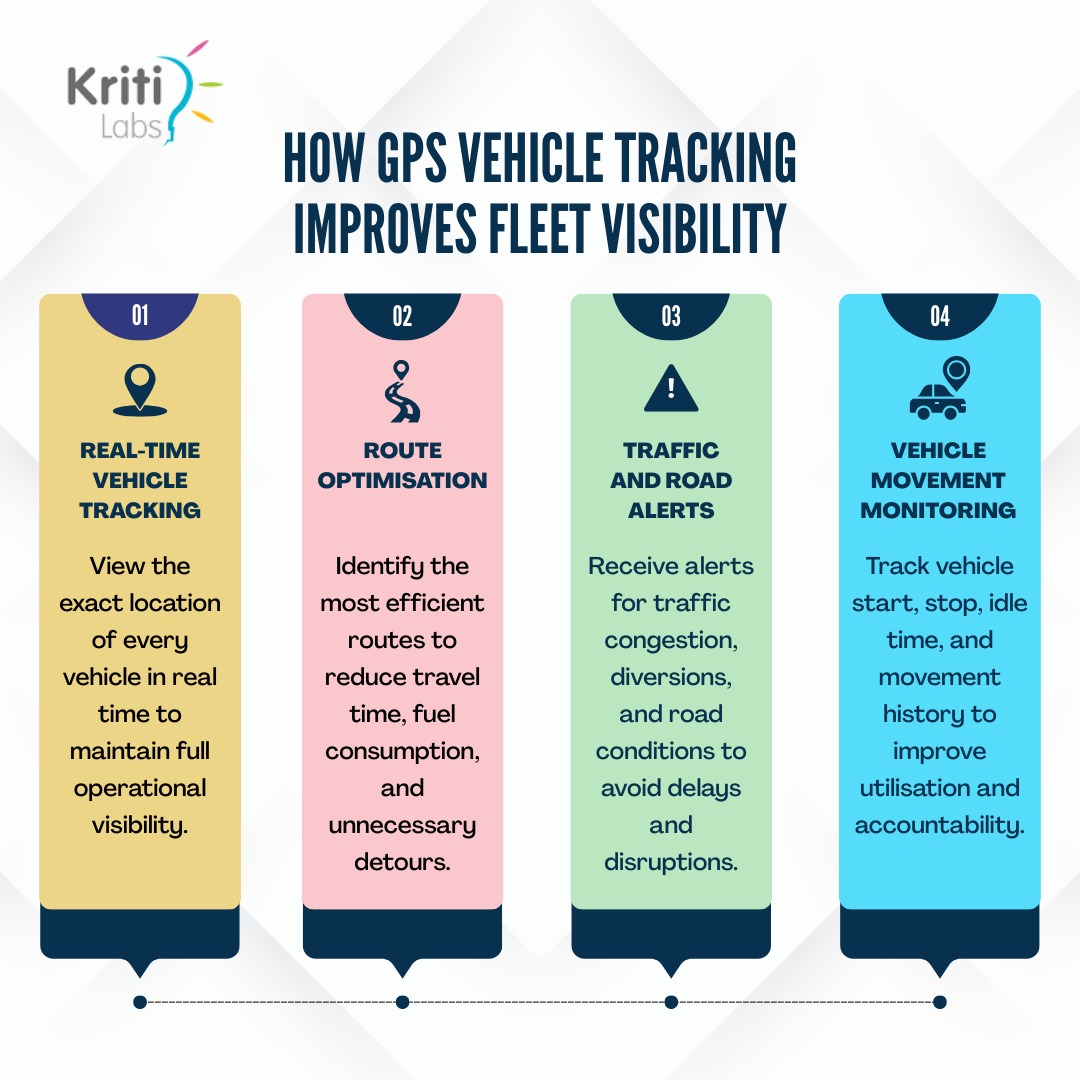
One of the most immediate benefits of a GPS tracking solution is real-time visibility of vehicles.
Fleet managers can view the exact location of each vehicle on a live map. This helps answer critical operational questions quickly, such as:
- Where is the vehicle right now?
- Is it following the assigned route?
- Has it stopped unexpectedly?
Real-time tracking allows faster decision-making during delays, emergencies, or customer escalations. It also improves coordination between dispatch teams and drivers.
2. Improved Road Safety
Driver safety is a major concern for organisations that operate vehicles daily. GPS tracking systems capture driving behaviour indicators such as speeding, harsh braking, sharp turns, and sudden acceleration.
When unsafe behaviour is detected, alerts can be sent to supervisors or drivers. Over time, behaviour reports highlight recurring issues that need coaching or intervention.
Safer driving reduces accidents, protects drivers, and lowers the organisation’s liability exposure.
3. Better Route Planning and Optimisation
GPS vehicle tracking helps organisations analyse route history and traffic patterns. Over time, this data reveals:
- Frequently congested routes
- Unnecessary detours
- Delays caused by poor planning
Using this insight, organisations can optimise routes for efficiency and safety. Vehicles spend less time in traffic, fuel consumption decreases, and deliveries become more predictable.
Route optimisation also helps avoid high-risk zones and accident-prone areas, which further improves safety outcomes.
4. Fuel Cost Reduction
Fuel is one of the largest operating expenses for fleet-based businesses. GPS tracking directly contributes to fuel savings by addressing key inefficiencies such as:
- Excessive idling
- Aggressive driving
- Unplanned route deviations
- Unauthorised vehicle usage
When drivers are aware that driving behaviour is monitored, fuel-wasting habits naturally reduce. Combined with route optimisation, organisations often see measurable fuel savings within months of implementation.
5. Increased Operational Efficiency
Manual coordination and guesswork slow down fleet operations. A GPS tracking solution replaces assumptions with accurate data.
Fleet managers can:
- Assign jobs based on vehicle proximity
- Track completion times accurately
- Reduce idle vehicles and downtime
- Improve asset utilisation
This results in more work completed with the same fleet size, improving overall productivity without additional capital expenditure.
6. Enhanced Customer Service
Customer expectations for delivery accuracy and transparency continue to rise. GPS tracking enables organisations to provide more reliable updates and realistic timelines.
With live tracking data, teams can:
- Provide accurate estimated arrival times
- Inform customers proactively about delays
- Resolve disputes with verified route history
Improved reliability builds trust and strengthens long-term customer relationships.
7. Stronger Compliance and Documentation
Many industries require strict compliance with transport and safety regulations. GPS vehicle tracking simplifies compliance by automatically logging key data such as:
- Trip duration
- Driving hours
- Route history
- Idle and stop times
These records create a reliable audit trail that supports regulatory inspections and internal reviews. Automated documentation reduces dependence on manual logs, which are often incomplete or inaccurate.
8. Reduced Vehicle Theft and Misuse
Vehicle theft and unauthorised use can result in significant financial loss. GPS tracking solutions improve security by enabling:
- Instant alerts when vehicles move outside defined zones
- Location tracking for stolen vehicles
- Monitoring of after-hours usage
In many cases, stolen vehicles can be recovered quickly because their real-time location is available. This reduces losses and insurance-related complications.
9. Data-Driven Driver Coaching
Rather than relying on assumptions or isolated incidents, GPS tracking provides objective data on driver behaviour.
Managers can use this data to:
- Identify high-risk driving patterns
- Reward safe drivers
- Provide targeted coaching where needed
Drivers often respond positively to data-based feedback, as it feels fair and transparent. Over time, this creates a culture of accountability and continuous improvement.
10. Long-Term Cost Savings and Business Growth
The cumulative impact of GPS vehicle tracking extends beyond day-to-day operations. Reduced accidents, lower fuel consumption, improved compliance, and higher productivity contribute to long-term financial stability.
Organisations benefit from:
- Lower insurance premiums
- Reduced maintenance costs
- Extended vehicle lifespan
- Improved operational planning
These advantages support sustainable growth and make fleet operations more resilient in competitive markets.
Choosing the Right GPS Vehicle Tracking Solution
Not all tracking solutions offer the same capabilities. When selecting a system, organisations should evaluate:
- Accuracy and reliability of location data
- Real-time alert capabilities
- Reporting and analytics depth
- Ease of use for drivers and managers
- Scalability for future fleet expansion
A well-chosen solution should integrate seamlessly with existing fleet processes and support long-term operational goals.
Final Thoughts
A GPS vehicle tracking solution is no longer a convenience tool. It is a strategic asset that supports safety, efficiency, compliance, and customer satisfaction.
By providing real-time visibility, actionable insights, and reliable documentation, GPS tracking enables organisations to manage their fleets with confidence and precision. As transport operations continue to evolve, businesses that invest in intelligent tracking systems will be better positioned to reduce risk, control costs, and deliver consistent performance.
Frequently Asked Questions (FAQs)
1. What is a GPS vehicle tracking solution?
A GPS vehicle tracking solution uses satellite technology to monitor the real-time location, movement, and status of vehicles. It helps organisations track routes, improve safety, and manage fleet operations more efficiently.
2. How does GPS vehicle tracking improve fleet efficiency?
By providing real-time visibility into vehicle movement, GPS tracking helps reduce idle time, optimise routes, prevent delays, and improve scheduling. This leads to better fuel efficiency and improved productivity.
3. Can GPS tracking help improve driver behaviour?
Yes. GPS tracking systems capture driving patterns such as speeding, harsh braking, and route deviations. These insights help organisations provide targeted coaching and improve overall driving discipline.
4. Is GPS vehicle tracking useful for compliance?
GPS tracking helps maintain accurate trip records, driving hours, and route logs. This supports compliance with transport regulations and simplifies audits by providing digital documentation.
5. Is GPS vehicle tracking suitable for small fleets?
Yes. GPS tracking is useful for fleets of all sizes. Even small fleets benefit from improved visibility, reduced operational costs, and better control over vehicle usage.
6. Does GPS vehicle tracking work in real time?
Most modern GPS tracking solutions offer real-time tracking along with historical data. This allows fleet managers to monitor current activity as well as review past trips for analysis.