
.jpg)
How AI-Powered Facility Management Software Helps Reduce Operational Costs
Modern facilities are becoming increasingly complex to manage. Organisations today operate across multiple sites, manage hybrid workplaces, and deal with rising energy costs and stricter compliance requirements. In this environment, traditional facility management methods often struggle to keep up.
Most conventional systems depend heavily on manual monitoring, reactive maintenance, and fragmented reporting. This approach not only slows down operations but also increases overall expenditure in ways that are not always immediately visible.
AI-powered facility management software introduces a shift towards data-driven operations. By combining artificial intelligence, IoT sensors, and real-time analytics, these platforms help organisations reduce inefficiencies and control operational costs more effectively. In many cases, businesses can achieve up to 40% reduction in operational costs through better resource utilisation, predictive insights, and automation.
What is AI-Powered Facility Management Software?
AI-powered facility management software is a digital system that helps organisations monitor, manage, and optimise building operations using artificial intelligence and connected technologies.
It typically combines:
- IoT sensors for real-time data collection
- AI algorithms for analysis and prediction
- Centralised dashboards for monitoring operations
- Automated workflows for alerts and responses
Unlike traditional facility management tools that focus on record-keeping or manual reporting, AI-based systems actively analyse patterns and support decision-making in real time.
This shift allows facility teams to move from reactive management to proactive control, where issues are identified and addressed before they escalate.
Key Cost Drivers in Traditional Facility Management
Before understanding cost reduction, it is important to identify where expenses typically accumulate in traditional systems.
1. Unplanned Maintenance
Equipment failures often occur without warning, leading to expensive emergency repairs and operational downtime.
2. Energy Inefficiency
Lighting, HVAC systems, and other utilities often operate without real-time optimisation, resulting in unnecessary energy consumption.
3. High Manpower Dependency
Manual inspections, security checks, and reporting require significant human resources.
4. Delayed Issue Detection
Problems are often identified after they escalate, increasing repair costs and operational disruption.
5. Poor Asset Utilisation
Equipment and spaces are frequently underused or misallocated due to lack of visibility.
These inefficiencies collectively increase operational costs and reduce overall productivity.
How AI-Powered Systems Reduce Operational Costs
AI-powered facility management software addresses cost inefficiencies through automation, intelligence, and continuous monitoring.
Predictive Maintenance
AI systems analyse equipment behaviour and detect early warning signs of failure. This enables maintenance teams to act before breakdowns occur, reducing repair costs and avoiding downtime.
Energy Optimisation
Smart systems monitor energy usage across facilities and adjust consumption based on occupancy and demand. This helps reduce waste and significantly lowers utility costs over time.
Workforce Efficiency
Automation reduces the need for constant manual monitoring. Teams can focus on exceptions rather than routine checks, improving productivity while reducing operational overheads.
Intelligent Security Monitoring
AI-based video analytics and access control systems help identify anomalies in real time. This reduces the need for continuous human surveillance and improves response speed during incidents.
Asset Tracking and Utilisation
Real-time visibility into assets ensures better allocation and usage. Organisations can avoid unnecessary purchases and maximise the value of existing infrastructure.
Role of Real-Time Data and Centralised Dashboards
A key advantage of AI-powered facility management software is real-time visibility.
Centralised dashboards provide a unified view of all facility operations, including security, maintenance, energy usage, and asset performance.
This helps organisations:
- Monitor multiple locations from a single platform
- Identify inefficiencies quickly
- Track performance trends over time
- Respond to alerts in real time
Decision-making becomes more proactive and data-driven, reducing delays and operational blind spots.
AI and IoT: The Core of Smart Facility Operations
AI-powered facility management systems rely heavily on IoT integration.
IoT devices such as sensors, cameras, and smart access systems continuously collect data from physical environments. AI then processes this data to identify patterns, predict issues, and automate responses.
For example:
- Occupancy sensors can adjust lighting and temperature automatically
- Access control systems can restrict or grant entry based on predefined rules
- Surveillance systems can detect unusual movement patterns and trigger alerts
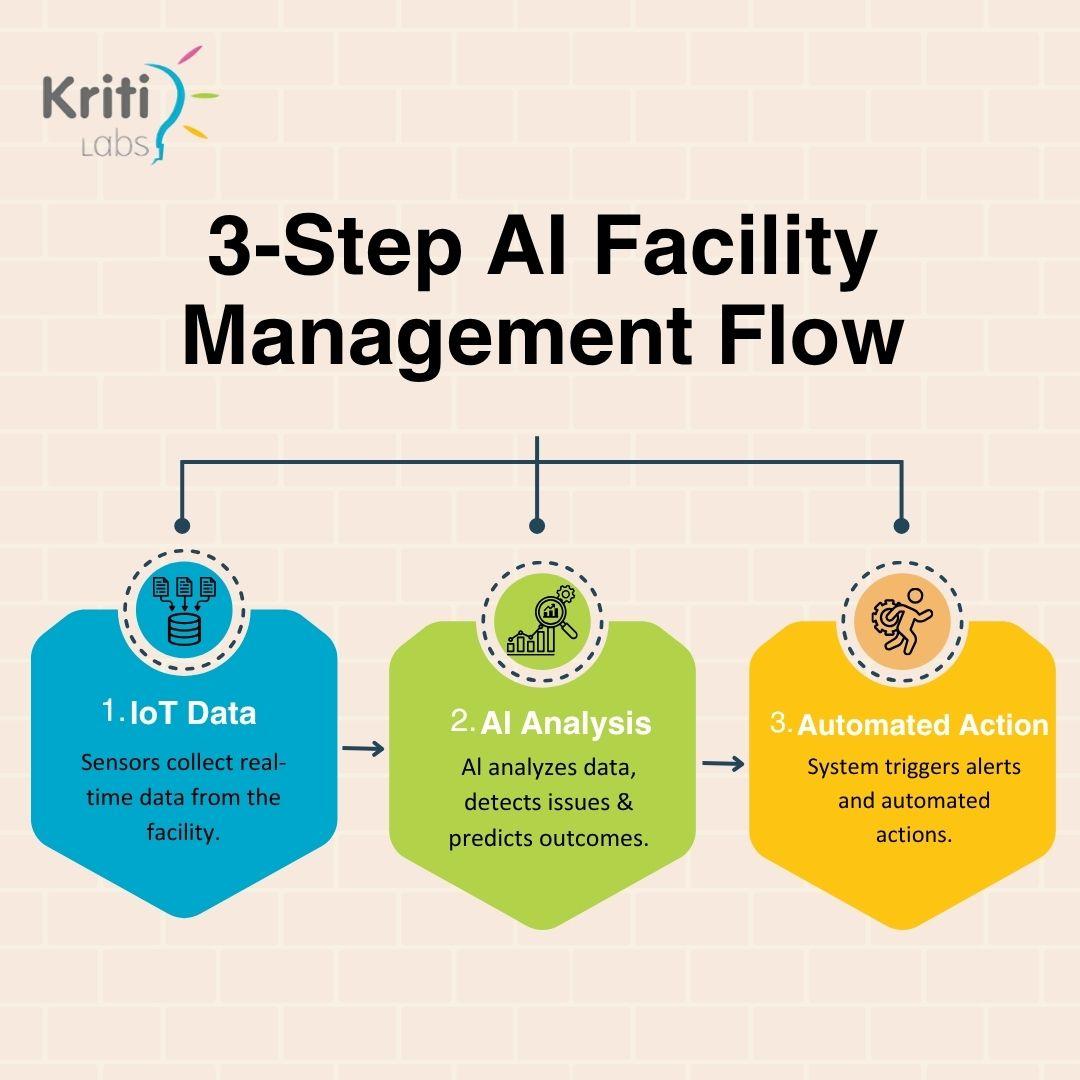
This integration creates a connected ecosystem where physical operations and digital intelligence work together seamlessly.
How Cost Savings of Up to 40% Are Achieved
The reported cost savings from AI-powered facility management software come from multiple optimisation areas rather than a single source.
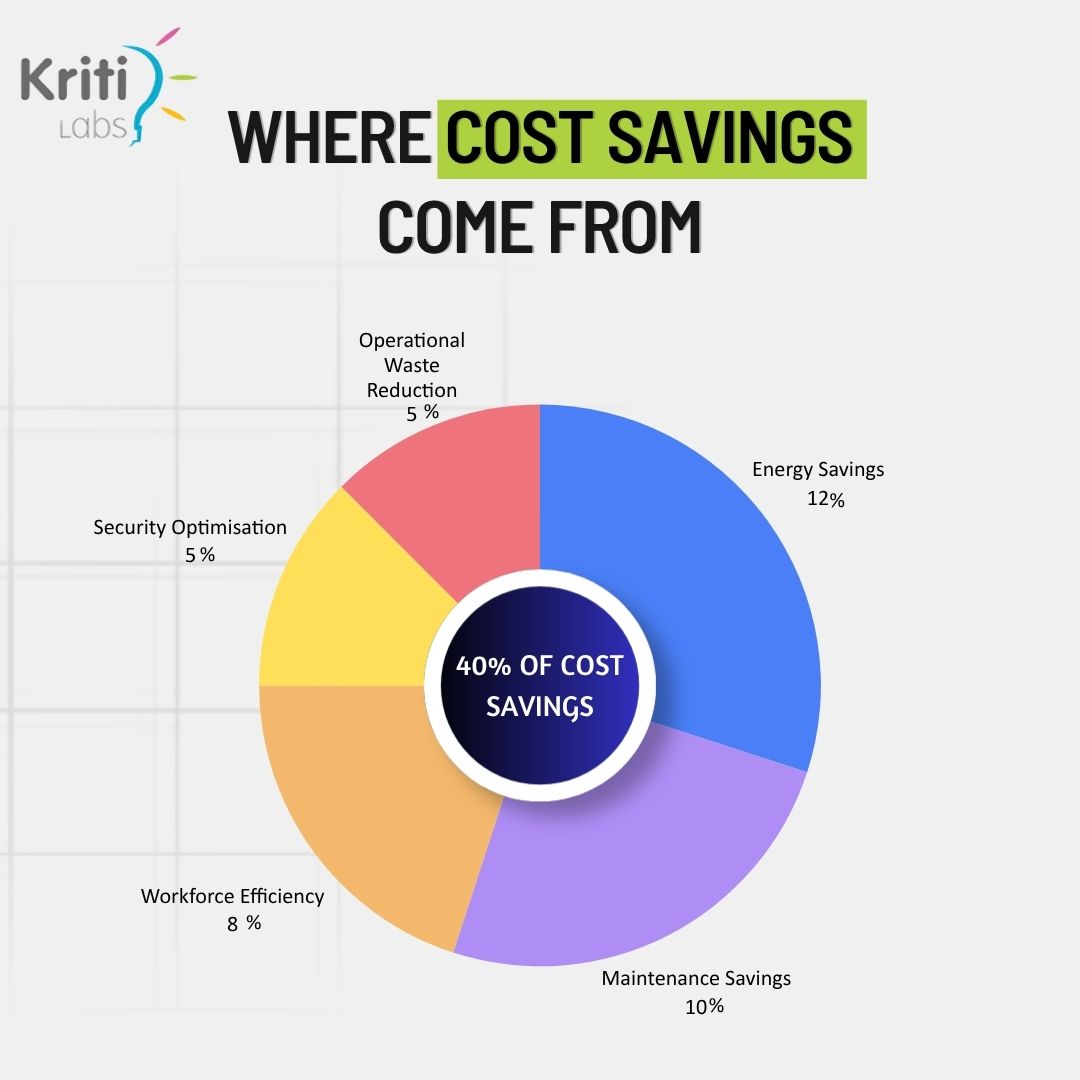
Energy Savings (10–15%)
Optimised HVAC, lighting, and equipment usage reduce unnecessary energy consumption.
Maintenance Savings (8–12%)
Predictive maintenance reduces emergency repairs and extends equipment lifespan.
Workforce Efficiency (5–10%)
Automation reduces dependency on manual inspections and routine monitoring.
Security Optimisation (5–8%)
AI-based monitoring reduces staffing needs while improving coverage and response time.
Operational Waste Reduction (5–10%)
Better visibility reduces underutilisation of assets and prevents unnecessary expenditure.
When combined, these improvements can lead to significant overall operational savings, especially in large or multi-site facilities.
Real-World Applications Across Industries
AI-powered facility management software is used across several sectors where operational efficiency is critical.
Manufacturing Facilities
Helps monitor machinery health, reduce downtime, and optimise production environments.
Corporate Campuses
Supports hybrid work environments with smart space utilisation and energy control.
Logistics and Warehousing
Improves asset tracking, security monitoring, and operational coordination.
Data Centres
Ensures optimal cooling, power usage, and infrastructure reliability.
Smart Infrastructure
Enables efficient management of public spaces and critical facilities.
Each sector benefits differently, but the core value remains consistent: improved efficiency and reduced operational cost.
Strategic Value for Modern Organisations
Beyond cost savings, AI-powered facility management improves long-term operational strategy.
Organisations gain:
- Better control over distributed operations
- Improved compliance and audit readiness
- Faster decision-making through real-time insights
- Reduced dependency on manual oversight
This creates a more resilient operational model that can adapt to changing business needs.
Conclusion
AI-powered facility management software is reshaping how organisations manage physical infrastructure. By combining IoT connectivity, predictive analytics, and automation, it addresses the inefficiencies that traditional systems struggle with.
The ability to reduce operational costs by up to 40% comes from cumulative improvements in energy efficiency, maintenance planning, workforce optimisation, and security management.
As facilities continue to grow in complexity, organisations that adopt intelligent management systems are better positioned to operate more efficiently, reduce waste, and maintain long-term cost control.